ServicesPediatric Crowns
Pediatric Crowns for Kids in Canton, MA
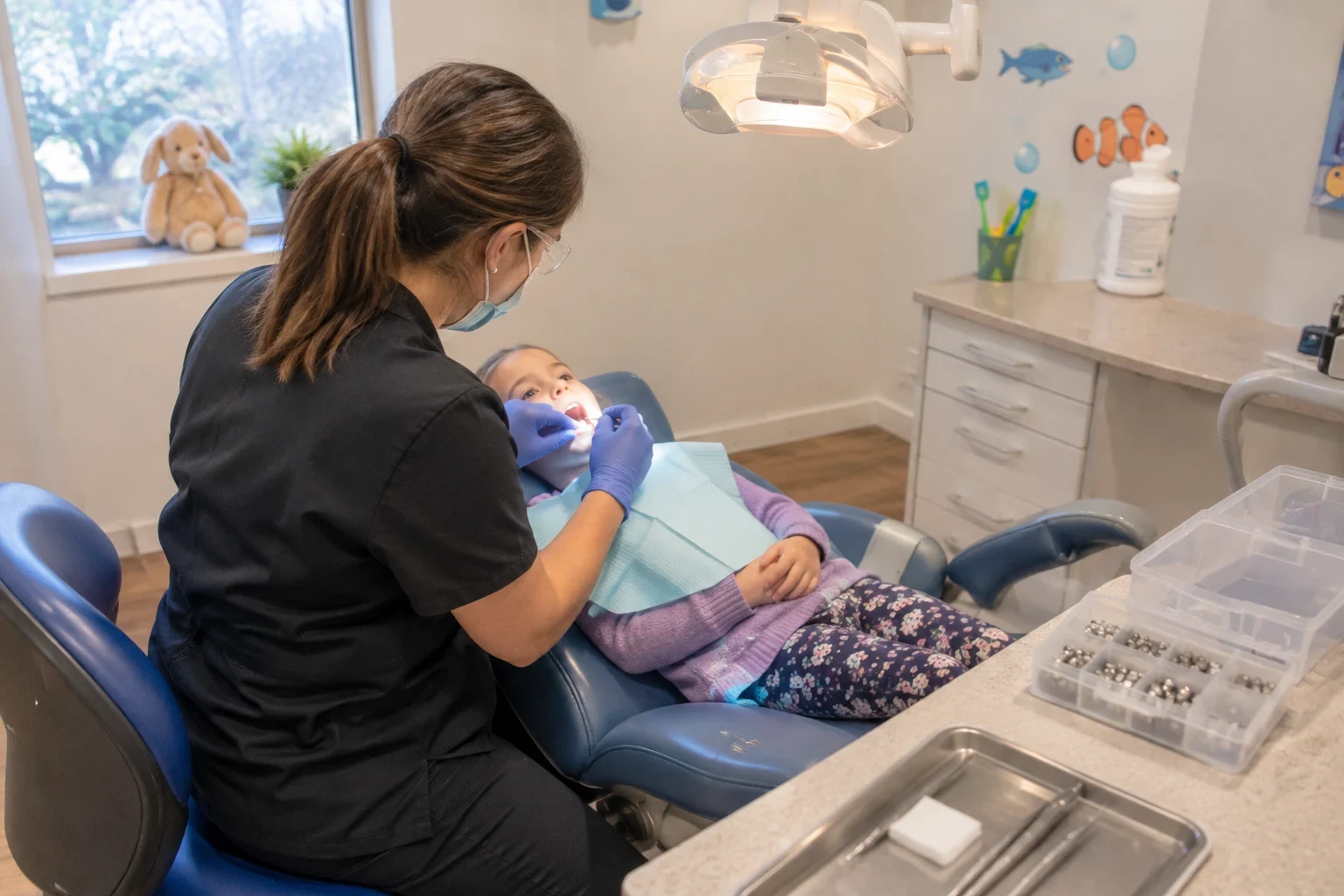
Some baby teeth have lost too much to hold a filling. A crown wraps the whole tooth so your child can chew again. Most single crowns are placed in one visit, and we give you the expected chair time up front so school and work plans stay intact.
What a Crown Does for Your Child
Think of a crown as a snug cover for the entire tooth. For baby teeth we use preformed crowns made in standard sizes. We choose the one that fits, trim it to shape and cement it on. Nothing goes to a lab, and there is no return trip for a permanent cap.
Baby molars need to last until roughly age 10 to 12. When decay has worn away a large part of the tooth, a filling may crack or come loose. A crown holds the remaining tooth together, lets your child chew normally and keeps room open for the adult tooth below.
Kids come to us from Canton and nearby towns such as Stoughton, Randolph and Sharon. Every one of them gets the same aim from us: a comfortable visit, a sturdy tooth and a plan parents can follow.
What the Crown Visit Includes
An exam and x-ray first
We look at how deep the decay goes before we pick a crown. This tells us if a filling could still work, or if the nerve needs treatment too.
Stainless steel crowns
These are the most common crowns for baby molars. They are tough, they fit in one visit, and they rarely come off. They are silver, which most kids don't mind on back teeth.
Tooth-colored options
For front teeth, or when parents want a white back tooth, we can talk about zirconia or composite crowns. They look natural but need a bit more tooth shaping and a dry, still mouth to place well.
Nerve treatment when needed
If decay has reached the nerve, we treat it first, then place the crown the same day. Our Root Canals page explains how this works on baby teeth.
Numbing and comfort
We numb the tooth gently and talk your child through each step. For kids who need several crowns or have a hard time in the chair, we can plan the work with sedation dentistry.
Aftercare in plain words
Before you leave, we tell you what to expect that evening, what to eat and when to call us.
Signs Your Child May Need a Crown
- A big dark spot on a molar
- Brown or black areas that cover much of the chewing surface often mean decay is too large for a filling.
- A filling that keeps breaking
- If the same tooth has been filled more than once and it fails again, a crown usually holds up better.
- A chipped or cracked tooth
- Falls and bumps happen. A tooth with a large piece missing may need a crown to stay strong.
- Soft, chalky or yellow enamel
- Some kids are born with weak enamel that wears down fast. A crown protects the tooth from more wear and sensitivity.
- Pain when chewing
- If your child avoids one side or complains about a sore tooth, the decay may be deep. Book an exam so we can check.
How a Crown Appointment Runs
- 1
Phone call and scheduling
Tell us what you have noticed. We set an appointment time and give you a realistic idea of how long your child will be with us, so you are not guessing.
- 2
Check-in and numbing
We review the x-ray with you, answer questions, then numb the tooth. Kids get a quick, simple explanation of what they will feel.
- 3
Cleaning out the decay
We remove the soft, decayed part and shape the tooth so the crown fits snugly. If the nerve needs care, we do that now.
- 4
Fitting and cementing
We try on sizes, trim the crown and cement it. We check the bite so it does not feel high.
- 5
Going home
Your child's lip and cheek will stay numb for a while, so watch for chewing or biting. If we are running behind on the day, we tell you at check-in, not halfway through.
What Moves the Cost of a Crown
Before any work starts, we walk you through the cost based on what the exam and x-ray show. The biggest drivers are the kind of crown and how much the tooth needs before it goes on. You can pay with MasterCard, Visa or Discover, use most insurance plans, or spread the cost with the CareCredit Patient Payment Plan.
- Steel or tooth-colored
- A stainless steel crown costs less than a zirconia or composite crown in a natural white shade.
- How many teeth
- Doing several crowns at once raises the total, but it can mean fewer trips and less numbing for your child.
- Work under the crown
- When the tooth needs a pulpotomy or similar nerve care first, that is added to the bill.
- Sedation
- If your child needs sedation to get through the visit, that is priced on its own and we explain it in advance.
- What your plan covers
- Insurance plans treat crown types differently. We help you read what your plan lists, but the insurer decides what it pays.
Crown Questions From Parents
- Baby teeth fall out anyway. Why does this one need a crown?
- Many baby molars hang on until age 10 to 12. If one is lost early, nearby teeth can shift and crowd out the adult tooth. A crown keeps the tooth working and lets your child chew without hurting. When a tooth is past saving, we talk with you about extractions and space maintainers instead.
- How much time should we set aside?
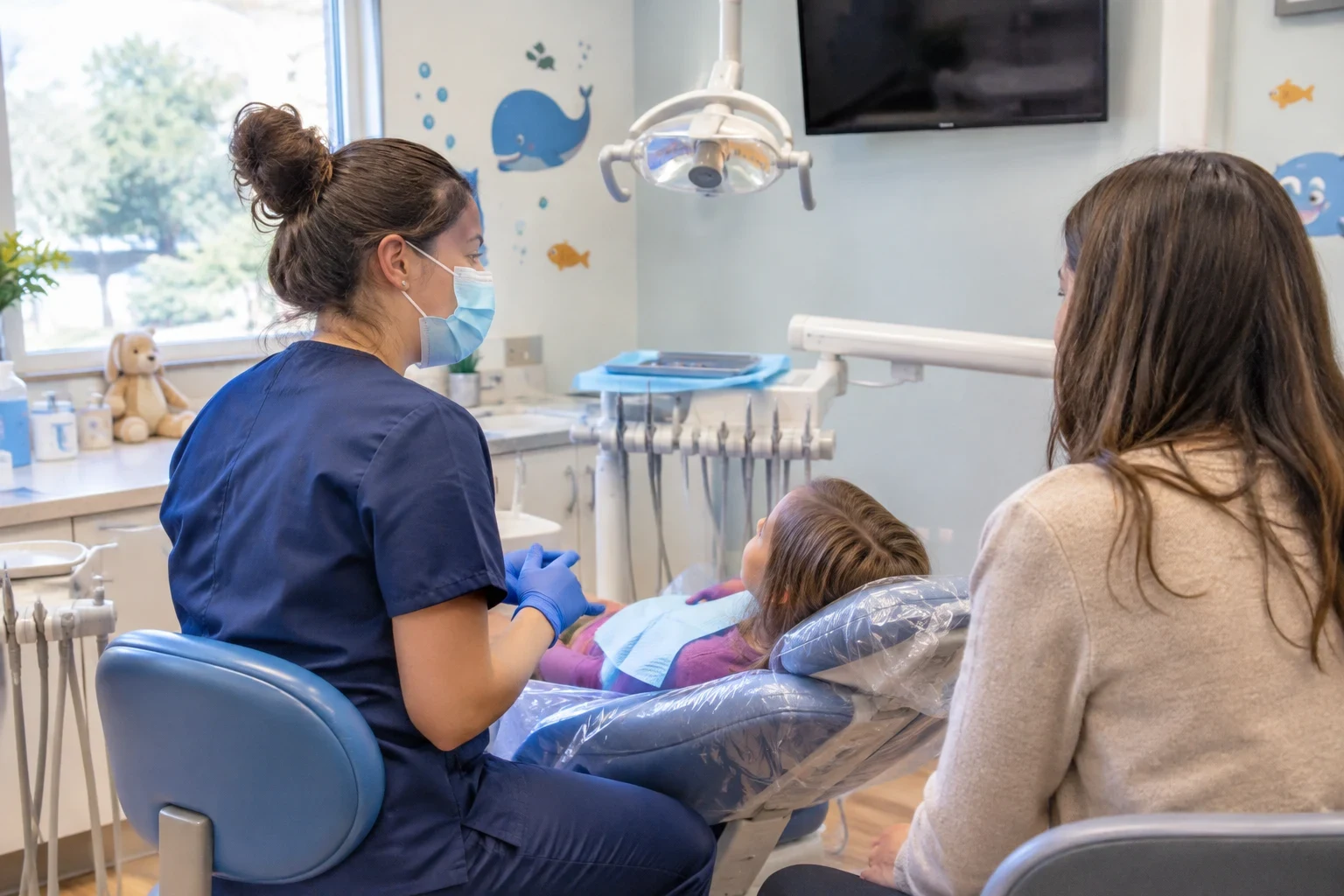
- A single crown is usually done in one visit. When we book, we give you a rough idea of the time based on how many teeth we are treating and whether the nerve needs care. If the plan changes on the day, we let you know right away.
- Is getting a crown painful?
- The tooth is numbed first, so most kids notice pressure rather than pain. Gums can feel a little tender for a day or two afterward. Children's pain medicine, given as the label directs, usually takes care of it.
- Are there foods to avoid?
- Once the numbness is gone, your child can eat normally. We do ask kids to skip sticky treats like taffy and caramels, since they can tug on any crown. Brush and floss around it the same as the other teeth.
- What happens to the crown later on?
- When the baby tooth gets loose and falls out, the crown comes out with it. The adult tooth comes in behind it the usual way. There is nothing extra to do.

Get a Weak Tooth Covered
Tell us about the tooth and we will find a time that works for your family. New patients can register on the same call.