ServicesRoot Canals
Root Canals for Kids in Canton
A deep cavity or a hard fall can hurt the nerve inside a tooth. We clean out the sore part, seal it and save the tooth. You get a clear plan for the visit, a realistic finish time and a call from us if anything changes.
What a Root Canal Means for a Child
Inside every tooth is soft tissue called the pulp. It holds the nerve and blood supply. When decay or an injury reaches it, the pulp gets inflamed or infected, and that is what causes the throbbing ache that keeps kids up at night.
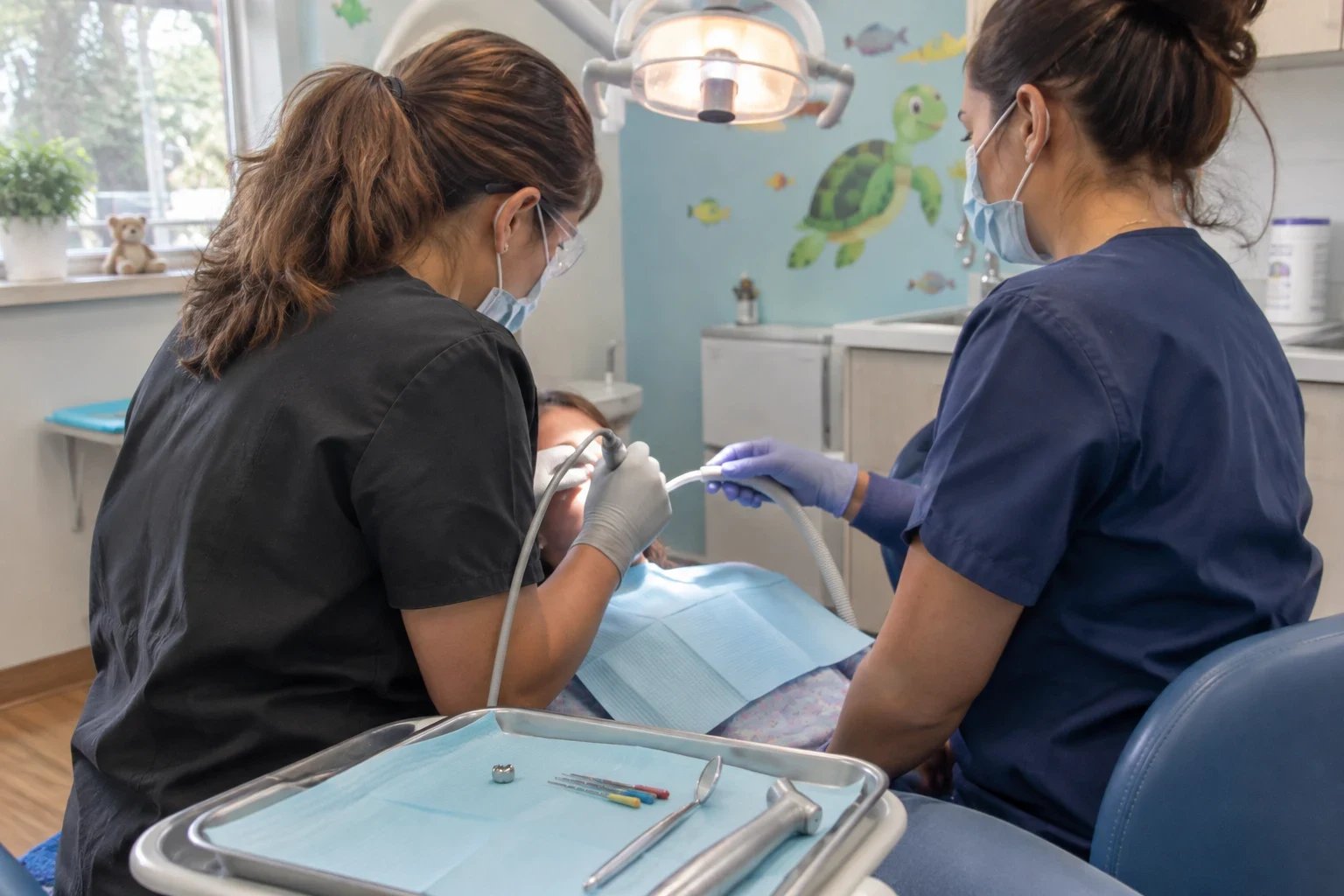
In baby teeth we usually do a pulpotomy. We remove only the damaged pulp in the crown of the tooth and leave the healthy part in the roots. When the whole pulp is affected, or the tooth is a permanent one, we clean out the canals in the roots too. Either way, the goal is the same: stop the pain, clear the infection and keep the tooth in place.
Saving a baby tooth matters more than most parents expect. It holds space for the adult tooth, helps your child chew and speak, and keeps the smile looking normal until it falls out on its own schedule.
What Your Child's Visit Covers
A close look and an x-ray
First we check the sore tooth and the gum around it. An x-ray tells us how far the damage has gone and whether the tooth is worth saving.
Slow, gentle numbing
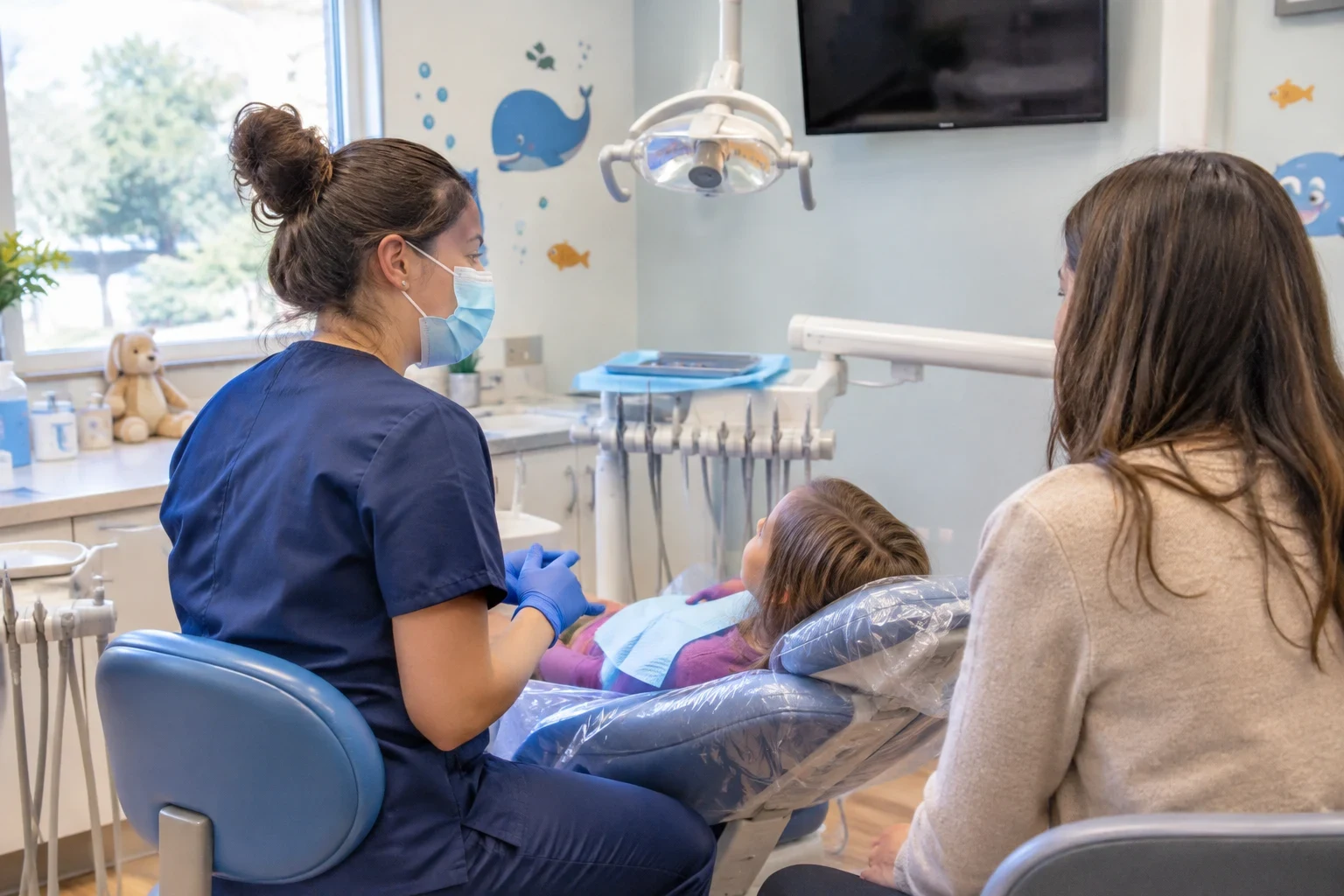
We take our time getting the area numb and explain each step in kid-sized words. Most children say it feels like pushing, not hurting.
Removing the sick pulp
We take out the swollen or infected tissue, clean the inside of the tooth and fill it with a medicine meant for that space.
A strong cap on top
A tooth that's been hollowed out can crack, so back teeth usually get a crown when we're done. You can read about the choices on our Pediatric Crowns page.
Straight talk when a tooth can't be saved
Some teeth are past fixing. If that's the case, we show you on the x-ray and go over pulling the tooth and fitting a space maintainer.
Signs Your Child May Need a Root Canal
- Pain that hangs around
- A short twinge from something cold is common. When hot or cold pain keeps going long after the bite is gone, the nerve is likely involved.
- Aching at bedtime
- A child who wakes up in tears over a tooth, or hurts for no clear reason, often has a problem in the pulp.
- A gum bump or puffy cheek
- A small pimple on the gum near a tooth, or swelling in the face, can mean infection is spreading. Have your child seen soon.
- Color change after an injury
- When a front tooth gets bumped and slowly goes dark in the weeks after, the nerve may be hurt. That can happen even with no pain at all.
- Chewing only on one side
- Kids often dodge a sore tooth without saying anything. Keep an eye on how they eat.
How the Visit Goes
- 1
The phone call
Tell us what you've noticed. We find a time that works for your family and tell you how long to plan for, so you know when your child will be back in school or you'll be back at work.
- 2
Exam and plan
We check the tooth and take an x-ray. Then we explain what we found, what we recommend and what it involves before we start anything.
- 3
Treatment
Most baby-tooth pulpotomies are done in one visit, often with the crown placed the same day. Permanent teeth can take longer and sometimes need a second visit. If your child is very anxious, we can talk about Sedation Dentistry.
- 4
Aftercare and follow-up
You leave with simple instructions for soft foods and pain relief. We check the tooth at later visits to make sure it is healing.
- 5
If plans change
If we're running behind or the work needs another visit, we tell you right away and reschedule with you, not around you.
What Changes the Price
You hear the cost from us before any work begins, so you can make the call with real numbers. What you pay comes down to which tooth it is and how much needs doing. For payment, we take Visa, MasterCard and Discover cards, CareCredit's Patient Payment Plan, and most insurance plans.
- Baby tooth or adult tooth
- Treating the top part of the pulp in a baby tooth is a shorter job than cleaning every canal in a permanent molar.
- Where the tooth sits
- A front tooth tends to have a single canal. Molars in the back have several, and each one adds chair time.
- The cap that follows
- A treated back tooth usually needs a crown to keep from cracking. We count that in the total so it isn't a surprise later.
- Sedation, if used
- Some kids need sedation to get through the visit safely and calmly. When that's the plan, it adds to the bill.
- What your plan covers
- Every insurance plan pays differently. We'll go over your benefits with you before the appointment so you know your share.
Root Canal Questions From Parents
- It's a baby tooth. Why not just let it go?
- Back baby teeth often hang on until a child is 10 to 12 years old. If one comes out early, the teeth beside it can shift and block the adult tooth's path. An infected tooth left in place can keep hurting and spread the problem. Treating it is usually the easier road.
- Is my child going to feel it?
- We numb the tooth before we start. Most kids notice pushing and a little buzzing, not pain. The ache that brought them in usually fades once we're done. A day or two of tenderness is normal, and children's pain medicine handles it.
- How much time should we block off?
- A pulpotomy on a baby tooth, with the crown, usually gets done in a single visit. An adult tooth can run longer or take a second appointment. We give you the expected length when you book, so you can sort out school and work ahead of time.
- What happens if the tooth is too damaged?
- We say so directly and point out the reason on the x-ray. Usually the next step is taking the tooth out. With a baby tooth, your child may need a space maintainer to keep room for the adult tooth.
- My child gets very nervous. Is sedation an option?
- In many cases it is. It depends on age, health and how your child handles dental visits. We walk you through the choices and how the day would go before you decide anything.
Get Your Child Out of Pain
Tell us what's going on and we'll find a time that fits your week. We'll give you a realistic picture of how long the visit takes.