ServicesSealants
Sealants for Kids in Canton
Sealants are a thin coating we paint onto the chewing surfaces of your child's back teeth. They keep food and germs out of the deep grooves where most kids' cavities start. No drilling, no shots, and we tell you up front how long the visit will take.
What sealants do and when they make sense
Back teeth have deep pits and grooves on top. A toothbrush bristle is often wider than those grooves, so even kids who brush well can't reach the bottom. Food and bacteria settle in there, and that is where a lot of childhood cavities begin. A sealant fills in those grooves with a smooth, thin layer so there is nothing for food to hide in.
The usual timing is when the first permanent molars come in, around age 6, and again when the second molars show up, around age 12. Some kids with deep grooves on baby molars benefit too. We look at each tooth at a checkup and tell you plainly which ones are worth sealing and which ones are fine as they are.
Many families in Canton and nearby towns like Stoughton and Sharon fold sealants into a regular checkup, so it is one trip instead of two. If that works for you, we plan the appointment length around it and tell you before you come in.
What a sealant visit includes
A tooth-by-tooth check
We look over each molar for deep grooves and early soft spots. A tooth that already has a cavity needs a filling first, and we tell you which teeth fall into which group.
Cleaning the surface
A sealant only holds on a clean, dry tooth. We polish out the grooves so the coating grips enamel instead of plaque.
Painting and setting the sealant
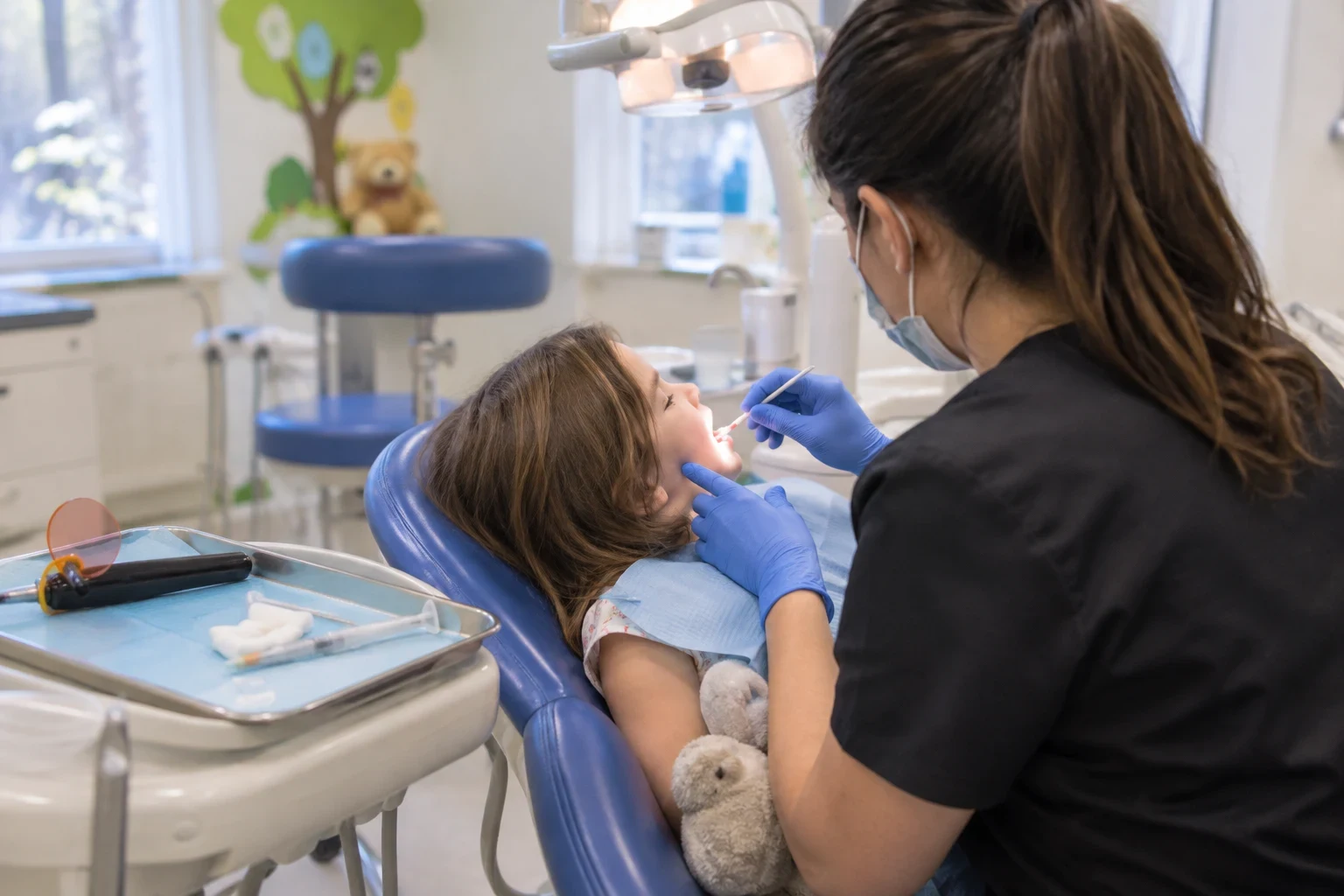
The liquid sealant goes into the grooves and a small blue light hardens it. Each tooth takes just a few minutes.
Checking how it feels
After it hardens, we ask your child to close and chew gently so we can confirm the bite feels normal. If any spot feels raised, we smooth it. Most kids just notice the tooth feels slick.
Checks at future visits
Chewing can wear or chip a sealant over the years. We look at each one at every checkup and patch any area that has thinned.
Signs your child may be ready for sealants
- New molars just came in
- Watch for big flat teeth appearing behind the last baby teeth, usually around age 6 or 12. Sealing them soon after they come in protects them during the years they are most at risk.
- Deep or stained grooves
- If the tops of the back teeth look dark in the grooves, or the grooves look deep and narrow, they trap food easily.
- Past cavities
- Kids who have had cavities in baby teeth tend to be at higher risk in their permanent teeth too. Sealants are one simple way to lower that risk.
- Brushing is still a work in progress
- Most young kids miss the back teeth. That is normal, and it is exactly the area sealants cover.
- Lots of snacking or sticky foods
- Crackers, fruit snacks and juice through the day give bacteria a steady supply of sugar. Sealed grooves give that sugar fewer places to sit.
How the appointment goes
- 1
We set the time with you
When you call, we ask how many teeth we are likely sealing and whether you want it paired with a cleaning. Then we give you a realistic length for the visit so you can plan pickup, school or work around it.
- 2
Quick check and cleaning
We look at the teeth, confirm which ones get sealed and clean the surfaces. If we find a cavity, we stop and talk with you before doing anything else.
- 3
Seal and set
We keep the tooth dry with cotton and a little suction, paint on the sealant and set it with the light. Your child can watch on the light if they want to. There is no numbing and no drilling.
- 4
Done and back to the day
Your child can eat and drink right after. We tell you which teeth were sealed and when we will check them next. If we are running behind before your visit, we let you know so you are not stuck waiting with a restless kid.
What affects the cost of sealants
Sealants are among the smaller costs in kids' dentistry, but a few things change the total. We walk you through them before any work starts. For payment, you can use most insurance plans, a Visa, MasterCard or Discover card, or the CareCredit Patient Payment Plan.
- How many teeth
- Each tooth is priced on its own. Two sealed molars cost less than four.
- What your plan covers
- A lot of plans pay for sealants on permanent molars in kids, though some cap the age or limit which teeth count. Keep your plan information nearby when you phone us and we will help you look it up.
- Same visit as a checkup
- Adding sealants to an exam and cleaning means one trip instead of two. The per-tooth cost stays the same either way.
- A cavity already started
- When a groove already has a small cavity, that tooth gets a filling, not a sealant. You hear about it from us before we treat it.
- Later touch-ups
- A sealant that wears or chips can be redone at a future visit. Plans differ on whether they pay for that.
Common questions about sealants
- Is getting sealants painful?
- Not for most kids. We use no needles and no drill. What some children find hard is holding their mouth open while we keep the tooth dry for a few minutes. We take it slowly and tell your child what is coming next.
- How long do sealants last?
- Often several years, though every child chews differently and some wear faster. We look at them at each exam. A worn spot gets touched up.
- Do sealants replace brushing and flossing?
- No. They only cover the chewing surfaces. The sides of each tooth and the gumline still need daily brushing, flossing and regular cleanings. Fluoride treatment is one more way we help guard those other areas.
- Can my child eat right after?
- Yes. The coating is fully hardened before your child gets out of the chair. Meals and drinks can go on as normal.
- How much time should we set aside?
- That depends on the number of teeth and whether a cleaning is part of the same visit. When you set up the appointment by phone, we give you a realistic length so you know when you will be finished.
- What if there is already a cavity in that tooth?
- We never seal over decay. That tooth would get a filling instead, and we go over the options and timing with you before starting anything.

Ready to protect those back teeth
Tell us your child's age and whether they are due for a checkup. We will set up a visit with a clear time frame you can plan your day around.